
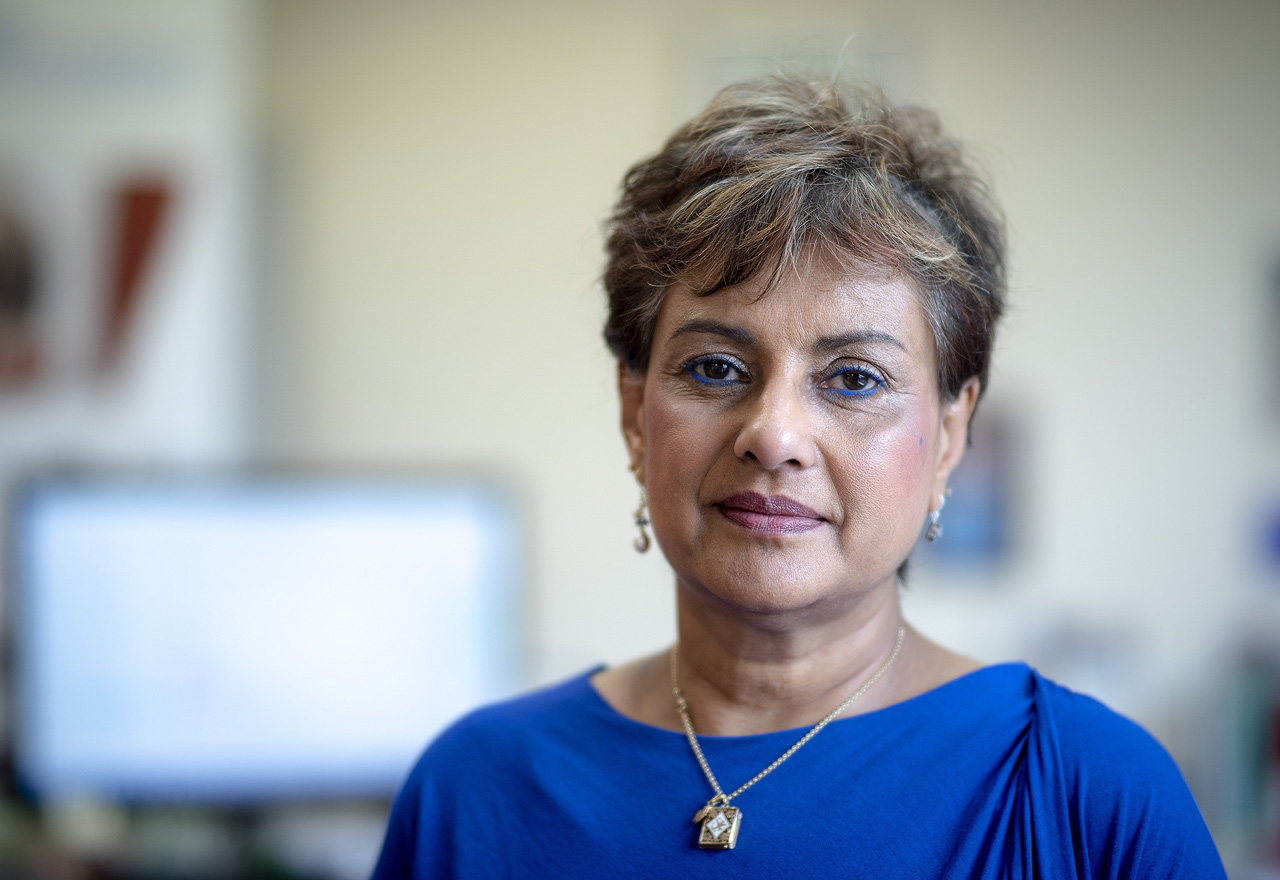
Nadra Ahmed, long-time chair of the National Care Association (NCA), tells CHP about the recent experience of finding out she was on the New Year’s Honours list for the second time after getting an OBE back in 2006.
Tell us what the National Care Association does, and how it distinguishes itself from other similar organisations.
The National Care Association is the most established of all the national bodies. We were formed in 1981 by like-minded providers who decided that they needed to have a voice so the ethos of the organisation hasn’t changed much. It is primarily for small- and medium-sized providers, although we do have some larger providers who are part of our membership.
The role of the association was to try and raise the concerns, working with local government at that point, but now much more with national government, to lobby on behalf of the people we care for and the providers who deliver that service.
We are probably one of the largest organisations. We have around 800 fully signed-up members, and then we have associate members in the region of about 4,500. We’re very well supported by some amazing sponsors and suppliers.
Our role is to help providers get the best deals, to give them somebody they can turn to for support when they need it. We are pretty much a 24-hour service, because we know the people we support work for 24 hours, seven days a week. Through Covid this was especially visible.
Talking about the size of the association, is there any such thing as too big for the NCA? Or is it just the aim to get as many members under your umbrella as possible?
Well, we do keep membership a little bit restricted. We’re at a good number [of members] right now, because you always want to make sure that you can deliver what is promised to members. We have a very small admin support – there’s no massive army of people behind us – but they are dedicated individuals who do everything they can to help.
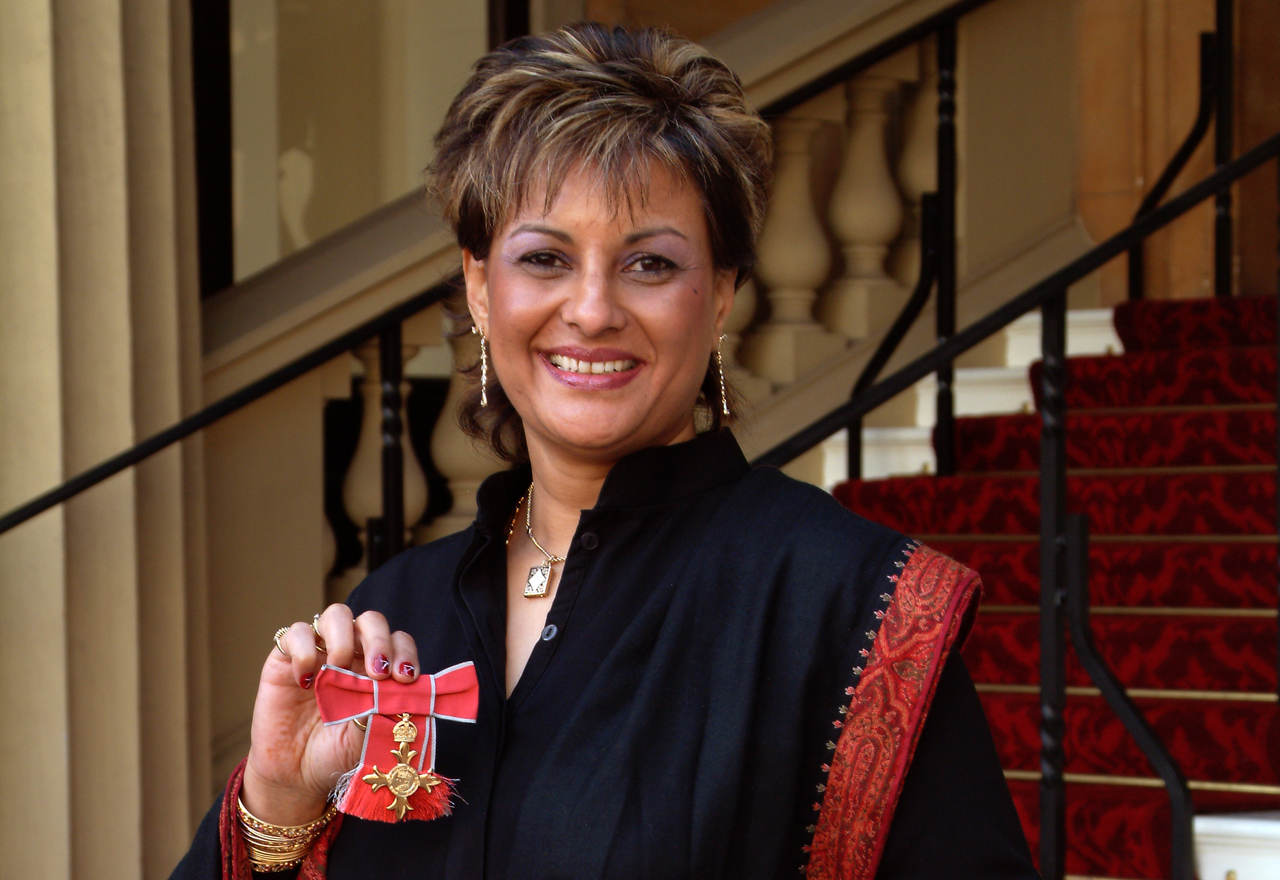
Congratulations on the CBE recently! How was it to get that news?
It was actually quite a big surprise. Before that, the OBE was really quite overwhelming. You don’t really expect that anything else will top that in life.
I love what I do, but this reaffirms that my voice can be heard. To get the note was quite strange, but a really pleasant surprise because I had just lost my father a few days before it was made public. Luckily I was able to tell him before then, which was really lovely. He was planning on coming with me and celebrating.

The news of the CBE will linger with me because surrounding circumstances. My dad went through quite a challenging time with the NHS and social care. I was a service user of the social care sector on behalf of my father, trying to navigate some of the challenges he faced. In a way, the CBE came when I was at my lowest, with the way the service works and hoping my voice will be heard.
Have you been to the palace yet? Or is that still coming up?
No, the invite came through in the last couple of days actually and it happens to fall on my birthday, which is going to be lovely. I feel very blessed.
How was 2022 for the National Care Association in general?
It’s been a really interesting year. Things don’t get any easier, do they? For the small- and medium-sized providers in particular we have had to fight very hard. Our suspicions came to fruition in many ways.
After the gruelling years of Covid it felt a bit like things were finally going to fall into place, particularly with regards to staffing challenges we’ve had, and we believed reform was finally coming, but then everything was put on hold again. It feels like we’ve come to a red light again, which is quite frustrating.
It’s frustrating for us as representatives, and it’s frustrating for providers who are seeing the impact of things like the energy crisis.
I think the word crisis seems to have been overused now consistently, because we just lurched from one to another with very little government support. I suppose my frustration will always be around the claim that all these billions have been released to social care, which is complete and utter rubbish, because none of it reaches the front line. It’s released through different organisations, like the local authorities or the NHS. By the time they work out what’s going to happen to it, it’s depleted and very little actually reaches the frontline.
2022 was a really frustrating year for us. 2023 feels like we have to tread with caution, as we are hearing from providers consistently about the many workforce issues that are challenging them.
Do you think Westminster will ever commit to proper funding and budgetary planning, rather than just announcing small emergency funds?
Not until they have somebody in that department who understands social care. That’s where we are challenged consistently. The focus of the last few secretary of states has been on the NHS. They talk about the NHS and how it can be saved, how it can be rebuilt; social care is an afterthought. And yet social care is the critical one.
So when it comes to the blame game, we talk about social care not having enough beds to take the discharges. That is a complete misunderstanding of where we are. Until we have a robust social care sector, the NHS will always struggle.
All the time that we can keep people safe in their own homes or in care settings – preventing deterioration of conditions, in learning disabilities, in younger adults, in mental health – all the time that social care can keep doing that, people don’t have to go knocking at the front door of the NHS, and that supports the NHS on an ongoing basis. All the rhetoric that comes out of Westminster is around how the NHS can be saved, supported, reignited, and how social care should be picking that up.
What you have to remember is social care by the very title means it is social. In 1981, when I opened our first care service, at that time that there was not a huge amount do. People walked in to our services, they handed over their fees, and we gave them meals, we kept their rooms clean – it was like a glorified hotel. They could come and go as they please.
What we’ve got now is people arriving in ambulances, pretty much at the end of life. We’ve moved so much in 40 years that we’re now looking after people with quite complex healthcare needs. Dementia was dealt with by the NHS 40 years ago; end-of-life patients were dealt with by the NHS. There were long-stay wards, and it wasn’t very nice. That’s why we moved towards care homes and home care, and rightly so. People should have that warmth around them when they are in the autumn of their lives, but it’s never been properly funded.
Now when you look at the complexity of healthcare needs we cover, that needs to be funded appropriately. That’s what the fair cost of care exercise was about. Independent commentators have told us over the years that this is an underfunded sector, but there isn’t anybody within the Department for Health and Social Care with the spine to deliver it properly. We hear lots of chatter about it. It’s very common to hear someone talking from the steps of Downing Street about how they’re going to fix social care, but when the reality comes they bottle it and we face another delay.
Do we perhaps need somebody like yourself in those cabinet meetings?
I wouldn’t for a moment think that I should be the person in there, but I think they need to listen to the reality from people like myself. There are many amazing representatives of the sector from other trade organisations as well with whom we work very closely. If we were all to sit around the table together with cabinet members and explain how we’re letting down people that we promised would be looked after cradle to grave…
And I speak with passion on this because that’s what I believe, but also I speak as a relative who saw the care system for what it is in the final year of my father’s life. I know what should be happening, and was accessing whatever I could to make that happen. There are people out there who don’t have a clue how to navigate the system. We owe it to them, the people that have paid their taxes and deserve better.
Given that most of us are going to rely on social care sooner or later, why do you think people are so short-sighted about these problems?
And it’s not only about older people. There are people who have a stroke at a young age, those with early-onset dementia, mental health conditions… it’s such a patchwork quilt of services that makes up social care, it can touch any of us at any time. If it was only about older people it might be easier to settle in some ways, but when we talk about funding being released to social care, it’s got to cover everything, including children’s services.
That’s how we’ve got to think about social care: it only matters when it matters, but when you need it and you suddenly have to navigate it, you realise the way social care can change a person’s life. From being lonely or feeling unwell, to trying to recover from a devastating condition – all of those things can be supported.
Is universal care or a National Care Service something that would help solve some of these issues, or do you fear it would be just as underfunded and have the same problems?
In my career I’ve heard so many different things, and I think my stance has always been the same: until you tell me and I can understand how that will improve the service, I’m not sure I’m willing to have the conversation. Whatever happens, it needs to improve. Changing the name of something, nationalising something, integrating something – if it remains the same, or even becomes more invisible, how is that helping the people that we care for?
What we do at the moment is we run nursing homes, or essentially mini hospitals. That’s what they’re doing. So under a National Care Service, what will be the definition of care? Will it be part of the health economy? Or are we talking about strictly social care? Because social care is for people with healthcare needs, so the term needs to be properly defined.
In the absence of real change, what can providers do to help ease some of these issues that we’ve been talking about?
International recruitment has been one thing around the staffing problem that we are advising people to try. It’s not the long-term solution, but there is a short-term fix here which might carry you through. The downside is that it’s not cheap. It does come with some challenges and responsibilities when you’re bringing people over to work in your service.
I think in regards to the other challenges we face around funding: work on those business plans, talk to your banks, be open and honest about where you are as a business, and then make the changes that need to happen. Some of that might be downsizing; some of that might be looking at more specialty services or things like that. All of these things need to happen.

I would say to every provider out there reading this who isn’t part of an association: join something. Being in a community that will help you with like-minded people is always going to be a really good thing. It’s a safety net.
For example, I had a query not very long ago where somebody said they had a member of staff whose nails were very long. They asked what they should do. It’s a person’s preference to have very long nails, of course. How do you deal with that? Being able to pick up the phone and talk to somebody can really help you.
We have a WhatsApp group which is run by one of our board. That has really taken off in the Midlands in particular, with people helping and supporting each other. They’re not all members of NCA, but they are a community in themselves.
What does the NCA have planned for the rest of 2023?
We’re going to try and do regional events. We’re looking to get back into the face-to-face – we think it’s important. Don’t get me wrong, I think webinars are good, but we’ve really missed that face-to-face engagement. I want to be going around the country too. The team are working on a lot of that.
We’re not looking at reintroducing our annual conference this year, but we will do next year. We’re just building it all up back up after the pandemic. At the moment our providers need us on hand at the end of a phone, so that’s what we’re trying to do.
We will continue to lobby local and central government. We will continue to work with our colleagues in the Care Provider Alliance, which I chair. We’ve got 11 national bodies around that table – we will continue to collaborate with them. We will together speak with a united voice.
It’s very rare that we disagree as national association chairs and CEOs – we are all coming from the same place. We have all the same evidence and we use that. So I think it is much more about collaboration, about working together.
If anything else, it is about the image of social care – we need to be promoting that. Let’s talk about the good things that are happening in social care; let’s talk about what makes a difference in somebody’s life. There are lots of examples of that. I know media doesn’t want to hear about them, but let’s try and get these stories out there.
